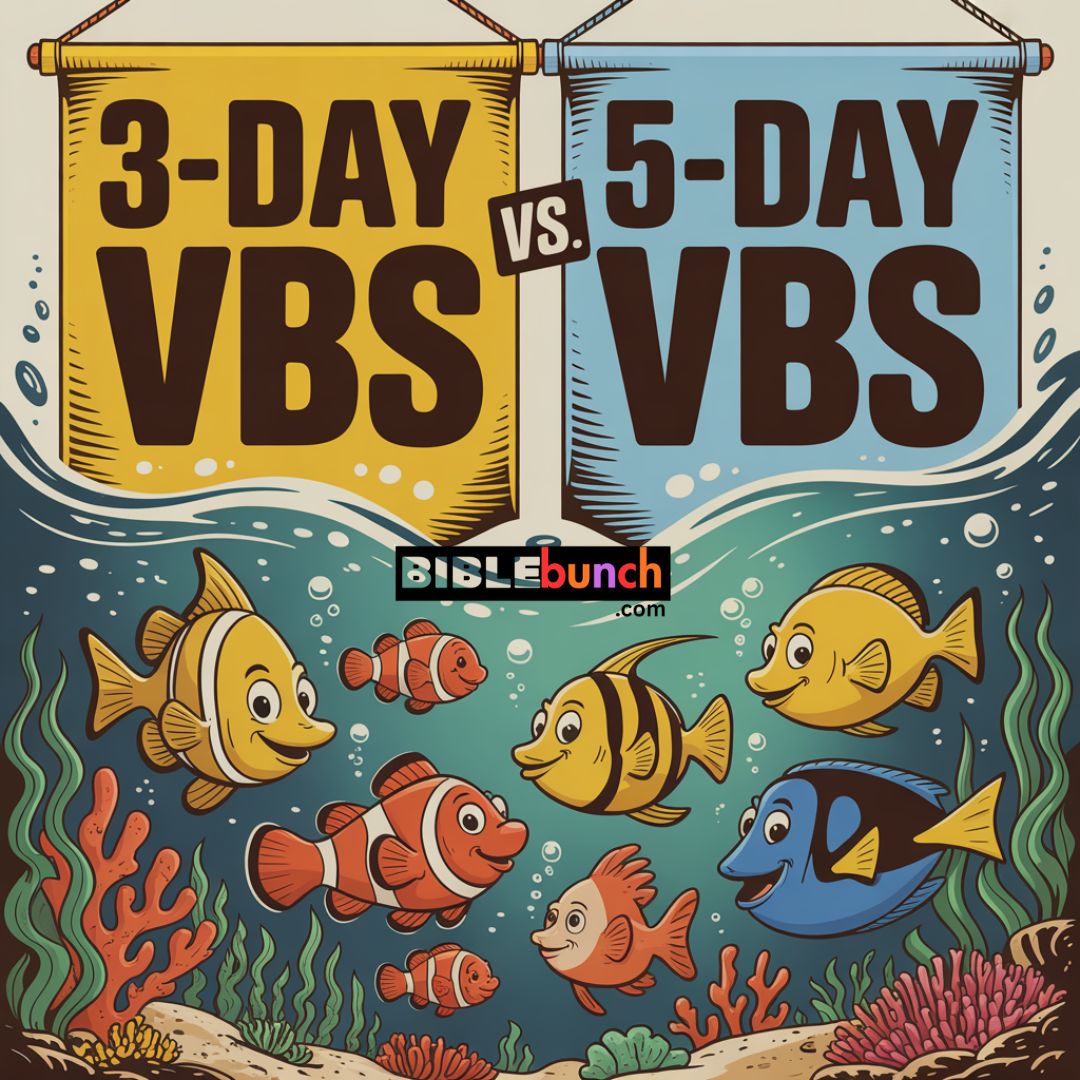
Vacation Bible School remains one of the most visible, high-impact ministry initiatives in the local church. Yet one of the foundational planning decisions—how long VBS should run—has shifted significantly in recent years. The traditional five-day format still dominates, but an increasing number of churches are adopting three-day structures in response to changing family rhythms, volunteer capacity, and community expectations.
This professional comparison provides a comprehensive, neutral analysis of both formats to help ministry leaders make an informed decision anchored in their local context.
1. Ministry Purpose and Learning Outcomes
Five-Day VBS
A five-day schedule provides a progressive learning arc, allowing themes and biblical narratives to unfold gradually. Repetition across the week strengthens retention—of memory verses, core truths, and worship elements. The extended timeline also increases opportunities for pastoral conversations, spiritual questions, and child-initiated engagement.
Three-Day VBS
A three-day schedule concentrates the week’s content into a tighter, more focused sequence. The format works particularly well when the ministry objective is clarity around one central truth rather than a multi-layered narrative progression. Leaders often describe the shorter format as high-intensity and momentum-driven, with each session carrying significant weight.
Practical takeaway
Five days support cumulative spiritual development; three days deliver clear, concentrated focus.
2. Family Schedules and Community Rhythms
Five-Day VBS
Families familiar with traditional VBS rhythms often appreciate a Monday–Friday format. It provides structure during summer months and may be considered a reliable, expected community offering.
Three-Day VBS
As family schedules diversify—particularly in dual-income households or communities with year-round athletics—a shorter event lowers barriers to participation. Attendance tends to remain more consistent over a three-day period.
Practical takeaway
Five days match predictable summer patterns; three days match busy or blended schedules.
3. Volunteer Capacity and Team Sustainability
Five-Day VBS
A full week allows volunteers to establish rhythm, confidence, and rapport. By midweek, teams often operate more smoothly and feel more connected to the children they’re serving. However, the extended timeline can increase fatigue—especially in churches with limited volunteer pools.
Three-Day VBS
Shorter weeks often ease volunteer recruitment and protect against burnout. Teams generally remain fully energized throughout the event. The trade-off is reduced time to build relationships or refine execution from day to day.
Practical takeaway
Five days strengthen volunteer rhythm; three days strengthen volunteer sustainability.
4. Budget Considerations and Stewardship
Five-Day VBS
A longer format maximizes fixed expenses—such as sets, décor, media, and curriculum—by spreading them over more program hours. Variable costs (snacks, crafts, daily supplies) naturally increase.
Three-Day VBS
Shorter schedules reduce day-to-day expenses, often allowing ministries to reinvest savings into higher-quality activities, décor, or family follow-up resources.
Practical takeaway
Three days reduce ongoing costs; five days extend the value of major investments.
5. Facility Usage and Operational Logistics
Five-Day VBS
Predictable daily flow supports smoother room usage, better traffic patterns during rotations, and a more settled pace for both children and leaders.
Three-Day VBS
A condensed schedule benefits ministries with limited classroom access, shared facilities, or tension with weekday usage. Three-day formats are especially effective for evening VBS.
Practical takeaway
Five days support structured facility flow; three days support flexible facility needs.
6. Curriculum Integration and Adaptation
Five-Day VBS
Most major publishers design curriculum around a five-day structure. Using all five sessions preserves intended pacing, narrative flow, and rotation variety with minimal adaptation.
Three-Day VBS
Curriculum can be adapted successfully but requires merging lessons, trimming rotations, or prioritizing specific Bible points. This can be beneficial for leaders who prefer customization, though it adds planning complexity.
Practical takeaway
Five days align with curriculum as written; three days require purposeful curation.
7. Child Experience, Engagement, and Memory Formation
Five-Day VBS
Children often deepen relationships with peers and leaders as the week progresses. Familiarity creates comfort, increasing participation and openness by Days 3–5.
Three-Day VBS
Children often experience heightened excitement due to the condensed schedule. Every session feels significant and fast-paced.
Practical takeaway
Five days nurture relational depth; three days amplify engagement intensity.
8. Follow-Up Potential and Long-Term Impact
Five-Day VBS
The extended schedule supports strong in-event relational connections, which can make follow-up more natural. Children who spend more time with leaders often reconnect more easily in weekend services.
Three-Day VBS
Teams often finish the event with greater energy, which can strengthen post-VBS communication, outreach, and integration into ongoing ministry programs.
Practical takeaway
Five days support relationship-based follow-up; three days support energy-based follow-up.
Conclusion: Choosing the Format That Fits Your Church
Both the three-day and five-day VBS models offer meaningful ministry opportunities. The most effective choice is not determined by tradition or trend, but by how well the format aligns with:
- Ministry philosophy
- Volunteer availability
- Facility constraints
- Budget realities
- Community rhythms
- Desired learning outcomes
- Curriculum adaptation preferences
When churches choose a schedule that reflects their context, both formats can deliver a rich, gospel-centered VBS experience.