
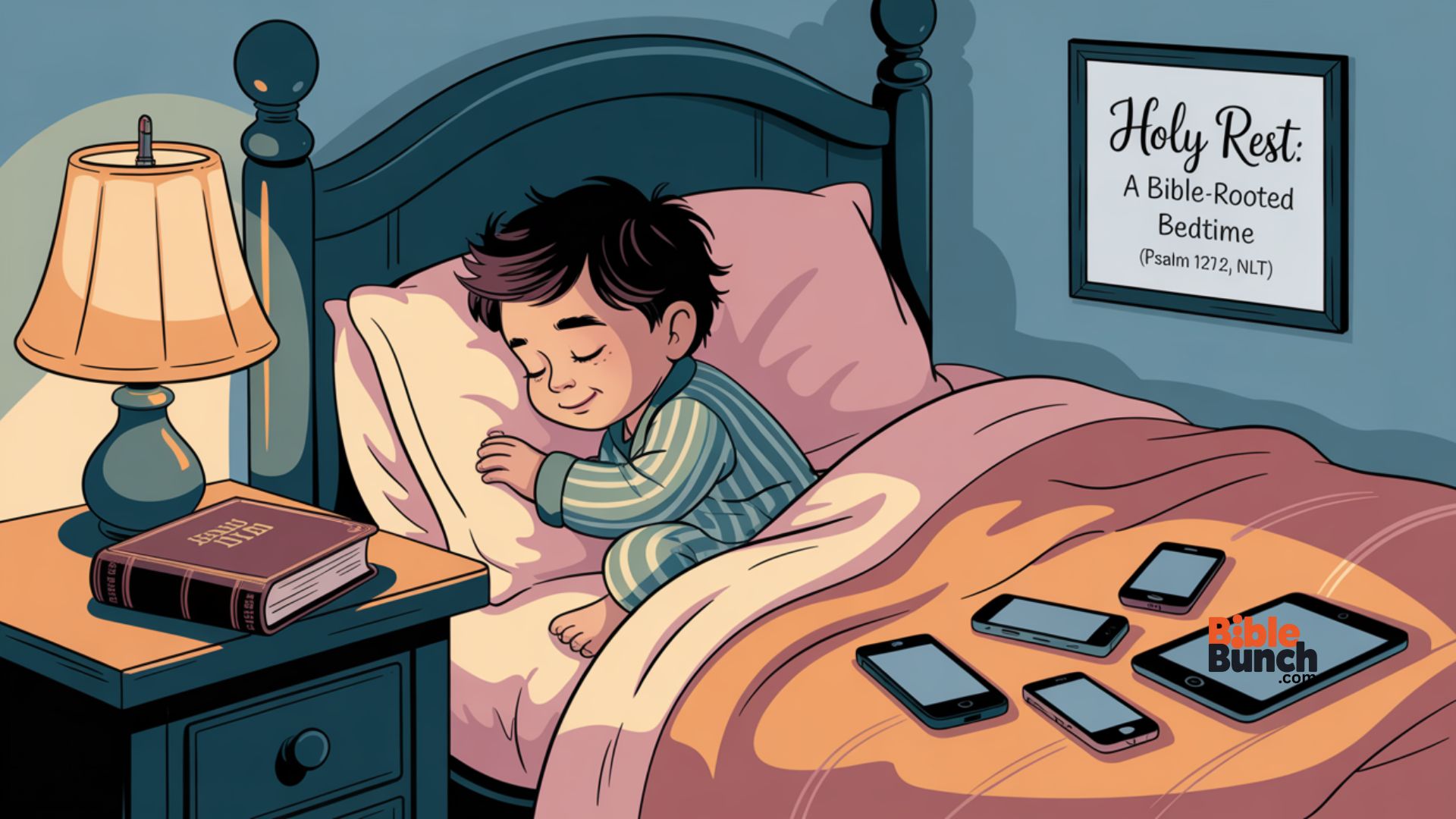
Bedtime can feel like the hardest time of the day—kids bouncing off walls, begging for “just one more show,” or sneaking a tablet under the blanket. But both Scripture and science agree: rest is holy, and children desperately need it.
1. Why Sleep Matters Spiritually and Physically
The Bible tells us that rest is a gift from God. In creation, God modeled Sabbath. Jesus Himself slept peacefully in the boat during a storm (Mark 4:38). Teaching our children to rest is more than behavior management—it’s discipleship.
Science strongly supports this. Healthy sleep in children is tied to:
- Stronger attention and learning
- Emotional regulation
- Lower risk of anxiety and depression
- Physical growth and immune health
The American Academy of Sleep Medicine (AASM) recommends:
- Preschoolers (3–5 years): 10–13 hours
- Elementary children (6–12 years): 9–12 hours
2. The Problem with Screens at Bedtime
Screens—whether TV, tablets, or phones—directly disrupt sleep for two reasons:
- Blue Light Exposure
The light from devices suppresses melatonin, the hormone that signals bedtime. Research confirms that even small amounts of evening screen use delay sleep. - Content Arousal
Fast-paced shows, games, or YouTube videos activate the brain, making it harder for kids to “wind down.” Studies show that screen use within one hour of bedtime is strongly linked to shorter sleep and more night-time awakenings.
In other words, a bedtime routine built around screens works against the very thing children need most.
3. A Biblical and Scientific Bedtime Rhythm
Here are practical steps you can take to help your children rest in the Lord and restore their bodies:
- Set a Tech Curfew
Turn off all screens 1 hour before bedtime. Charge devices outside of bedrooms. Replace screens with calming rituals. - Create a Bedtime Liturgy
Read a short Bible story, pray aloud, and speak a blessing over your child. Simple words like, “May you rest in God’s love tonight,” give comfort and peace. - Dim the Lights
Use soft lamps instead of bright overhead lighting. This signals the brain that bedtime is near and helps melatonin levels rise. - Calming Activities
Try puzzles, gentle music, or coloring before bed. These low-stimulation activities prepare both body and spirit for rest. - Model Peaceful Rest
Children mirror parents. If you’re scrolling at night, they notice. When you unplug, you show them rest is valuable.
4. Encouragement for Parents
Rest isn’t just about sleep—it’s about trust. Every night we teach our kids: “God is in control. We can rest because He is awake.”
Proverbs 3:24 (NLT) promises:
“You can go to bed without fear; you will lie down and sleep soundly.”
Creating peaceful rhythms now not only improves your child’s health but also roots them in a lifelong posture of trust in God.
5. Family Reflection Guide
- Read together: Psalm 127:2.
- Ask: “Why do you think God wants us to sleep well?”
- Practice: Create a new bedtime routine: screens off, lights dim, short Bible reading, prayer.
- Reflect: After a week, talk as a family: “Did bedtime feel calmer? Did you notice more peace?”
Sources
- American Academy of Sleep Medicine. Sleep Duration Recommendations for Children and Adolescents. Journal of Clinical Sleep Medicine, 2016.
- AASM Health Advisory: Melatonin Use in Children and Adolescents. 2022.
- Carter, B., Rees, P., et al. (2016). Association Between Portable Screen-Based Media Device Access or Use and Sleep Outcomes. JAMA Pediatrics.
- Hale, L., & Guan, S. (2015). Screen time and sleep among school-aged children and adolescents: A systematic literature review. Sleep Medicine Reviews.