
Every summer, churches across the country prepare for Vacation Bible School, one of the most visible and formative ministries they offer children. Alongside lesson planning and volunteer recruitment comes a familiar challenge: how to raise the necessary funds without creating confusion, criticism, or fatigue among donors.
Recent conversations among children’s ministry leaders point to a clear conclusion. The most effective VBS fundraising strategies focus less on line-item expenses and more on outcomes—specifically, the children being served.
Avoid the Line-Item Trap
While transparency matters, experienced leaders caution against publicly itemizing VBS budgets down to individual expenses such as snacks, decorations, or curriculum.
Once expenses are broken down too finely, donors often shift from generosity to evaluation: Why does that cost so much? Could this be done cheaper? What begins as a fundraiser can quickly turn into a debate.
The consensus among seasoned organizers is simple: itemized budgets invite scrutiny; unified goals inspire participation.
Frame Giving Around Cost Per Child
Instead of listing expenses, many churches are finding success by presenting a single, inclusive number:
“It costs $___ to provide one child with a full VBS experience.”
That figure quietly covers everything—from materials and meals to décor and volunteer support—without drawing attention to individual categories. More importantly, it keeps the focus where it belongs: on children.
This approach also makes giving feel tangible. Sponsoring a child feels personal; underwriting supplies does not.
“Sponsor a Child” Models Continue to Work
The “sponsor a child” model remains one of the most effective tools in VBS fundraising. Donors understand it immediately. They can picture the impact. And they feel connected to the mission.
Some churches enhance this model by offering small, symbolic reminders—such as a prayer card or token—encouraging donors to pray for the children they’ve helped support.
Use Images, Not Spreadsheets
Photographs from previous VBS programs often communicate more effectively than numbers ever could. Smiling children, engaged volunteers, and lively worship scenes remind donors why VBS matters.
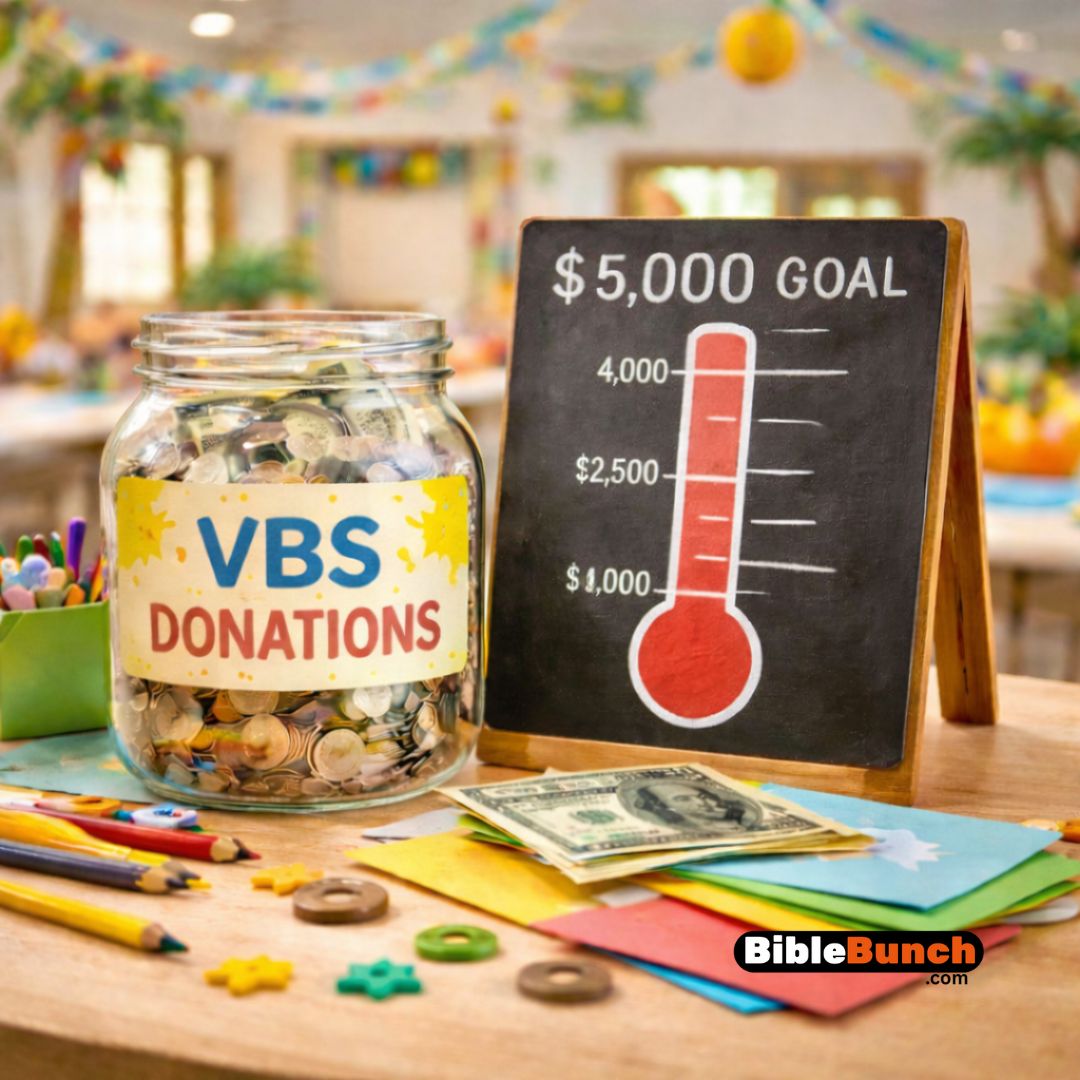
A simple progress thermometer or clearly stated goal—“Help us serve 100 children this summer”—creates momentum without overwhelming detail.
Community Fundraisers Still Matter
Traditional fundraisers continue to play a role, particularly when they bring people together. Pancake breakfasts, bake sales, coin drives, and child-led activities not only raise funds but also build ownership across generations.
When children participate in fundraising, the entire congregation is reminded that VBS is not a program run for families, but a ministry carried by the church.
The Bottom Line
Churches do not need to justify every dollar to inspire generosity. They need to clearly articulate their mission.
When fundraising emphasizes children, impact, and shared purpose—rather than line items and internal budgets—people give more willingly and with greater confidence.
VBS has always been about planting seeds of faith. The way churches fund it should reflect that same clarity of purpose.