
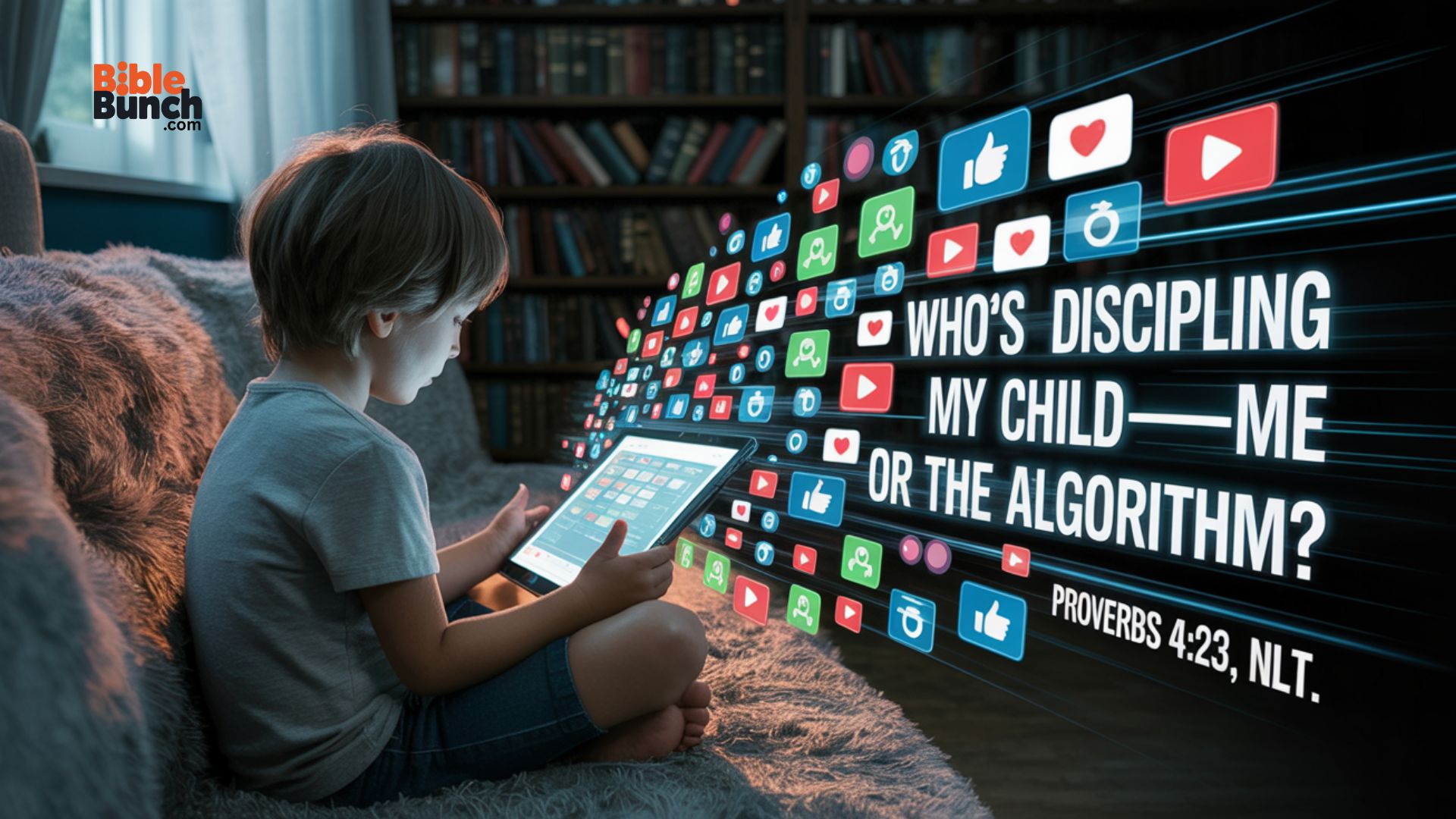
Our kids are growing up in a world where TikTok, YouTube, and streaming apps are more than entertainment—they are teachers, shaping what children love, value, and even believe. Recommendation systems (“For You” pages, autoplay, suggested videos) are not neutral. They are designed to keep kids engaged by feeding them more of what holds their attention—whether good or harmful.
So the question for Christian parents becomes: Who is discipling your child—your family, or an algorithm?
1. How Algorithms Shape Children
Algorithms notice patterns in what kids watch, search, or click. If a child watches a silly dance video, the system will serve dozens more. If they pause on a beauty channel, they may be led toward content that promotes unrealistic body ideals.
Research shows:
- Recommendation systems are powerful at shaping children’s viewing habits and often guide them toward more extreme or problematic material if left unchecked (JAMA Network Open, 2024).
- Parents and policymakers are increasingly concerned about algorithms functioning as “silent tutors”, forming kids’ values and self-image without oversight (Bipartisan Policy Center, 2023).
2. What the Bible Says about Formation
Discipleship has always been about shaping desires. Paul urges in Philippians 4:8 (NLT):
“Fix your thoughts on what is true, and honorable, and right, and pure, and lovely, and admirable. Think about things that are excellent and worthy of praise.”
This is the heart of biblical parenting: training children to desire what is good. But the algorithm has its own agenda—more views, more clicks, more ads.
3. Practical Steps for Parents
- Watch Together (Co-Use)
Sit with your child once a week and scroll together. Ask: “What is this video teaching me to love?” This transforms passive watching into active discipleship. - Prune the Feed
Unfollow accounts that glorify harmful values. Follow channels that encourage creativity, kindness, and biblical truth. Kids don’t just consume content—they consume values. - Teach Algorithm Awareness
Even young kids can understand: “This app notices what you click and tries to show you more of the same. That doesn’t mean it’s true or good.” This builds media literacy as part of discipleship. - Philippians 4:8 Rule
Before watching or subscribing, teach your child to ask: “Does this line up with what God calls pure and admirable?”
4. Encouragement for Parents
You are the first and best discipler of your child. Algorithms may be loud, but they are not all-powerful. By setting habits, filtering content, and teaching discernment, you help your child learn how to guard their heart in a digital world.
As Jesus prayed in John 17:15 (NLT):
“I’m not asking you to take them out of the world, but to keep them safe from the evil one.”
Your calling isn’t to shield your children from every influence but to equip them to walk wisely in the middle of it.
5. Family Reflection Guide
- Read together: Philippians 4:8.
- Ask: “What kinds of videos help us think about good and true things? Which ones don’t?”
- Practice: Spend 15 minutes co-watching. Then, together, prune at least 3 channels or creators that don’t align with family values.
- Reflect: End by praying, “Lord, help us guard our hearts and fix our minds on You.”
Sources
- JAMA Network Open (2024). Assessment of Algorithmic Recommendations on Children’s Video Platforms.
- Bipartisan Policy Center (2023). Tech Algorithm Tradeoffs Report.
- Livingstone, S., & Stoilova, M. (2021). Children’s engagement with online recommendation systems. EU Kids Online Report.