Planning VBS shouldn’t feel like educated guessing. But that’s how most budgets get built: start with curriculum, add crafts and snacks, then hope the rest “works out.”
It usually doesn’t.
And when the budget breaks, it rarely breaks because someone intentionally overspent. The stress almost always comes from two things:
- Missing categories (facilities use, volunteer care, training nights, follow-up, security)
- Unclear scaling (what changes when you go from 30 kids to 120)
That’s why a lot of churches don’t “blow the budget” on purpose—they just discover too late that they budgeted for the obvious and forgot the invisible.
The good news: you can fix this without turning VBS planning into a spreadsheet hobby. You just need a budget structure that’s honest about what VBS really costs—and a fast way to get to a realistic number early.
The Truth About VBS Costs (It’s Not One Number)
A realistic VBS budget is less about “How much does VBS cost?” and more about:
“What kind of VBS are we building, and what costs follow from that?”
Two churches can run the same theme and spend wildly different amounts because their choices differ:
- Are you doing daily snacks or a simple water-only plan?
- Are you buying décor or building it?
- Are shirts included? For kids? For volunteers? Both?
- Are you hosting a family night?
- Are you paying for childcare during volunteer trainings?
- Are you using online registration and eating processing fees?
If those decisions aren’t priced early, the budget becomes a surprise generator. And surprises during VBS planning rarely feel fun.
The Three Buckets That Make Budgets Honest
Most VBS spending falls into three buckets. If you name them up front, you stop missing things.
1) Fixed Costs (Paid No Matter How Many Kids Attend)
These are foundational—expenses you’ll pay even if attendance is lower than expected.
Common fixed costs include:
- Curriculum/kit and leader materials
- Decorations base plan (the core pieces you’ll use either way)
- Promotion basics (signage, printing, banners)
- Facilities and operations (cleanup supplies, extra custodial support)
- Tech needs (printing, adapters, batteries, check-in supplies)
- Family night / celebration plan (if you do one)
Why fixed costs matter: They set your baseline before a single kid registers. If you don’t know the baseline, you can’t lead confidently when registrations rise or fall.
2) Variable Costs (Scale With Attendance)
These scale with kids (and sometimes with days). Variable costs usually feel “normal” because they’re part of the daily experience—but they’re also the first place budgets get squeezed when registrations jump.
Common variable costs include:
- Crafts (per kid per day)
- Snacks (per kid per day)
- Take-home items (bags, booklets, devotionals)
- Optional kid shirts, books, or merch items
Why variable costs matter: They determine what happens when registrations jump 40% in the final week. If you don’t know your per-kid costs, growth becomes stressful instead of exciting.
3) Hidden Variable Costs (The Stealth Categories)
These are costs tied to how you collect money and care for people. They don’t show up in the “fun categories,” but they show up in your real bank account.
Common hidden variable costs include:
- Payment processing fees (if you take online payments)
- Scholarships/discounts/sibling pricing (revenue reduction)
- Volunteer hospitality (meals, snacks, water, coffee)
- Safety/security supplies (labels, signage, first-aid)
Why hidden variable costs matter: They quietly consume margin. And when margin disappears, leaders feel the pressure personally—either by cutting corners late or absorbing costs themselves.
What Churches Remember (and What They Forget)
Most teams remember:
- Curriculum and media
- Crafts and snacks
- Decorations
- Promotion basics
Most teams forget:
Pre-VBS prep
- Training nights
- Trial runs
- Check-in testing
- Childcare during trainings
Facilities use
- A/C bump
- Trash and paper goods
- Extra cleanup supplies
- Overtime/custodial support
Safety and security
- Background checks
- First-aid supplies
- Labels, pickup systems, lanyards
- Clear signage and traffic flow
Follow-up
- Family night costs
- Follow-up packets
- Next-step events
- Mailers/connection supplies
Volunteer care
- Hospitality and meals
- Appreciation
- Childcare for volunteer families
If you only budget the “remembered” list, you’re not budgeting for VBS—you’re budgeting for the idea of VBS.
The Fastest Way to Build a Realistic Budget (Without Living in Spreadsheets)
Here’s the problem: most leaders can’t spend hours building a perfect budget while also recruiting volunteers, preparing curriculum, and running Sunday ministry.
You need a way to get to a realistic number quickly—then refine.
That’s what a calculator is for.
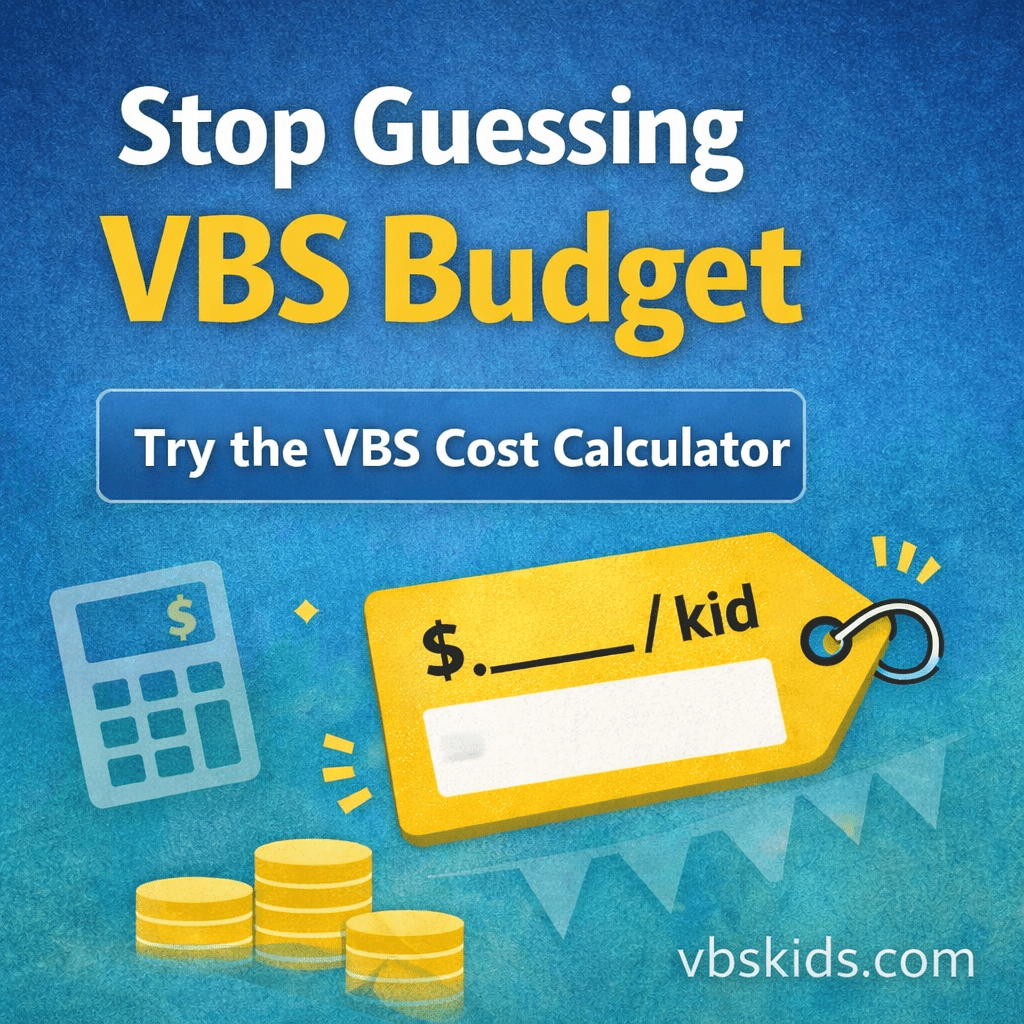
Use the VBS Cost Calculator as Your “First Honest Draft”
Instead of building from scratch, take this approach:
- Enter your event basics (kids, days, volunteers)
- Add your costs using categories that reflect real VBS spending
- Review totals and cost-per-kid so you can make decisions early
The key benefit isn’t only the total—it’s that the tool forces you to include categories that are easy to overlook.