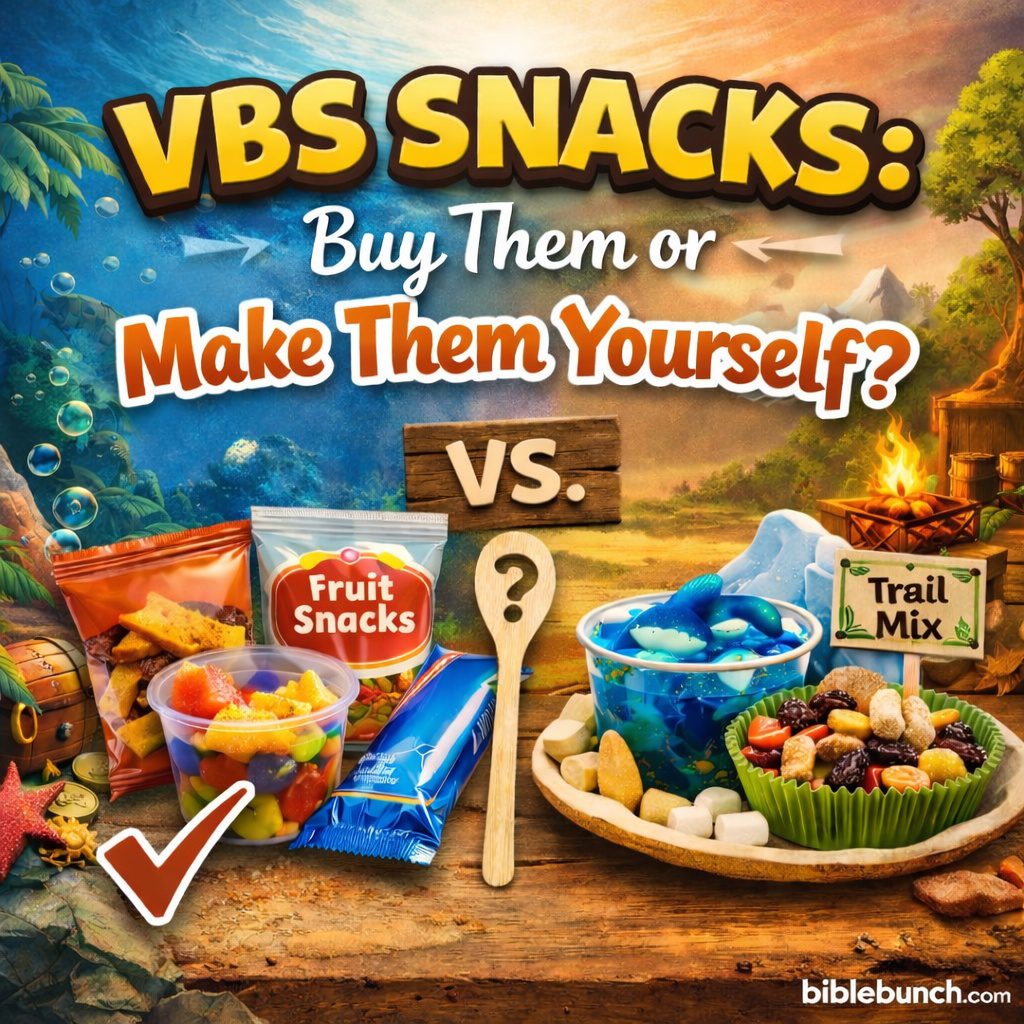
Choosing snacks for Vacation Bible School seems simple until it becomes one of those decisions that affects nearly everything else. Snacks touch the budget, volunteer workload, parent confidence, allergy concerns, daily timing, cleanup, and even how well your theme comes alive. Churches often start by asking what would be the cutest or most memorable option, but the better question is what will work well for your actual team all week long. The strongest lesson from current VBS planning trends is clear: most churches are not building elaborate snack programs from scratch. They are choosing simple snacks that are easy to manage and then adding just enough theme to make the moment feel connected.
That matters because VBS is not a one-day birthday party. It is a repeated children’s ministry event that has to function under real conditions. Leaders are juggling registration, classroom movement, music, games, teaching, bathroom breaks, volunteer coverage, and family communication at the same time. In that kind of environment, a snack decision is never just about food. It is about whether your team can repeat the process safely, calmly, and consistently on day one, day three, and day five.
What Most Churches Seem to Do Now
If you look at the direction of current VBS publisher resources and live church practice, the pattern is fairly easy to see. Most churches appear to buy the basic snack and then build only a light theme layer around it. In other words, the base is usually store-bought, individually wrapped, or assembled from very simple grocery items. The theme comes through the name, the serving container, the table sign, the topper, or one visual detail rather than a complicated recipe.
That approach makes sense because it solves several ministry problems at once. Prepackaged snacks are easier to count, easier to distribute, easier to store, and easier to explain to parents. They also create fewer surprises when attendance shifts. If ten more children show up than expected, it is much easier to add extra bags of crackers or fruit snacks than it is to stretch a handmade snack plan that was portioned too tightly. Churches are learning that consistency is often more valuable than creativity when you are feeding a crowd on a schedule.
There is also a trust factor. Parents tend to feel more at ease when food is clearly identified and easier to check. Even when a church provides alternative snacks or asks parents to send substitutes for specific allergy needs, a simple packaged system helps staff answer questions quickly. Homemade food is not automatically a bad choice, but it does require more discipline. Someone must know every ingredient, every substitution, and every possible cross-contact concern. That is manageable for some churches, but not for all of them.
When Prepackaged Snacks Are the Better Choice
For many churches, prepackaged snacks are the wisest default. They make the most sense when attendance is high, volunteer energy is limited, and food allergies are part of the planning conversation. They also work well when your VBS space is tight, your food-prep area is minimal, or your daily schedule leaves very little margin between rotations. In those settings, prepackaged does not mean boring. It means dependable.
A dependable snack plan protects the rest of the ministry. Volunteers do not have to arrive early to cut, sort, frost, or assemble food at the last minute. Leaders do not have to guess whether they made enough. Cleanup stays simpler. The check-in team can answer parent questions faster. And if your church is collecting donated snacks, prepackaged options are usually easier for families and church members to contribute because they are easy to buy in bulk and easy to store until VBS begins.
This is one reason prepackaged snacks have become such a normal choice. Churches are not necessarily lowering their standards. They are responding to the realities of scale, safety, and labor. A snack that is easy to serve and easy to explain can actually support a stronger ministry atmosphere than a more creative option that leaves volunteers overwhelmed and parents uncertain.
When Making or Building Snacks Yourself Still Works
That said, there are situations where a church-made or assembled snack makes real sense. Smaller VBS programs often have more flexibility. Churches with a dependable kitchen team or a hospitality culture may be able to do more without adding chaos. If your church sees snack time as part of the teaching moment, not just a break between stations, then a simple themed build can be worth the extra effort.
The key word is simple. Many of the best VBS snacks are not truly homemade in the full sense. They are assembled. That is a very important distinction. There is a big difference between baking dozens of themed treats from scratch and setting out graham crackers, pretzel sticks, fruit, or trail mix in a way that supports the lesson. Churches often do well when they stop thinking in terms of full recipes and start thinking in terms of easy assemblies. That allows the snack to feel connected to the theme without turning the snack station into a second crafts room.
A church-made snack is most likely to succeed when the team has enough adults, enough prep space, and a very clear process. It also helps when the same people are responsible for the snack plan from start to finish. Problems usually appear when the idea is ambitious but the staffing is not. A snack plan that depends on perfect volunteer attendance, last-minute assembly, or complicated refrigeration is usually too fragile for VBS.
How to Match Snacks to Your VBS Theme
The best way to come up with themed VBS snacks is not to start with Pinterest or a recipe board. Start with the imagery and language of your theme. Ask what children are meant to feel and remember. Is the world of your VBS built around the ocean, the wilderness, a farm, a trail, outer space, a castle, a construction site, or Bible-times travel? Once you know the central images, you can attach those images to food that your church can actually manage.
This is where many churches overcomplicate things. They assume themed snacks have to look elaborate to be effective. In practice, they usually do not. A normal snack with a strong name often works better than a complicated snack with weak execution. Fish crackers can support an ocean or Bible story theme. Trail mix can support a camping, wilderness, or journey theme. Pretzel sticks can suggest walking sticks, building supplies, or campfire bundles. Round crackers or cereal can become planets, stones, coins, or stepping stones depending on the story frame around them.
That is why naming matters so much. Children remember fun language. Themed snack names help ordinary food feel like part of the larger experience. The point is not to impress. The point is to make the whole week feel thoughtfully connected.
Use Theme Through Presentation, Not Complexity
For most churches, presentation is the smartest place to spend creative energy. A themed label, topper, napkin color, or table sign can do more work than an extra hour of kitchen prep. This is especially helpful for churches trying to keep costs down while still making VBS feel memorable. You do not need five custom snacks for five days. You need a snack system that holds together and a few simple touches that reinforce the theme.
That approach also scales better. If your attendance rises unexpectedly, you can usually add more of a simple snack and keep the same themed presentation. If a volunteer misses a shift, the system does not collapse. If a parent asks what is being served, the answer is clear and immediate. All of that supports trust, and trust matters more than novelty in a children’s ministry setting.
Another benefit of keeping the theme light is that it protects your budget. It is surprisingly easy for snack costs to grow once churches start buying special ingredients and decorative extras. A simple base snack with a themed name and sign usually gives you a better return than an elaborate build.
So Which Choice Is Best?
For most churches, the best answer is a blended one. Buy the snack itself when safety, speed, consistency, and volunteer capacity matter most. Build or lightly assemble the snack only when your team has the staffing and space to do it well. That is the model current VBS practice seems to support.
If your church is large, fast-moving, or managing several allergies, packaged snacks are probably the better choice. If your church is smaller and has strong kitchen support, a simple assembled snack may be worth it. But even then, simple usually wins.
In the end, the best VBS snack is not the one that looks the most impressive in a photo. It is the one your church can serve safely, clearly, affordably, and cheerfully every day of the week. When the snack plan supports your theme without burdening your team, it has done its job.